
Advertisement
As the global luxury real estate market matures, a quiet but decisive shift is underway.
Prestige is no longer measured solely by architectural drama, panoramic views, or exclusivity. Increasingly, the true mark of luxury is ecological intelligence – the ability of a place not only to preserve beauty, but to restore, regenerate, and future-proof the land on which it stands. In this new paradigm, Zimbali Estate emerges as a compelling reference point for what the next generation of luxury living can, and should, be.
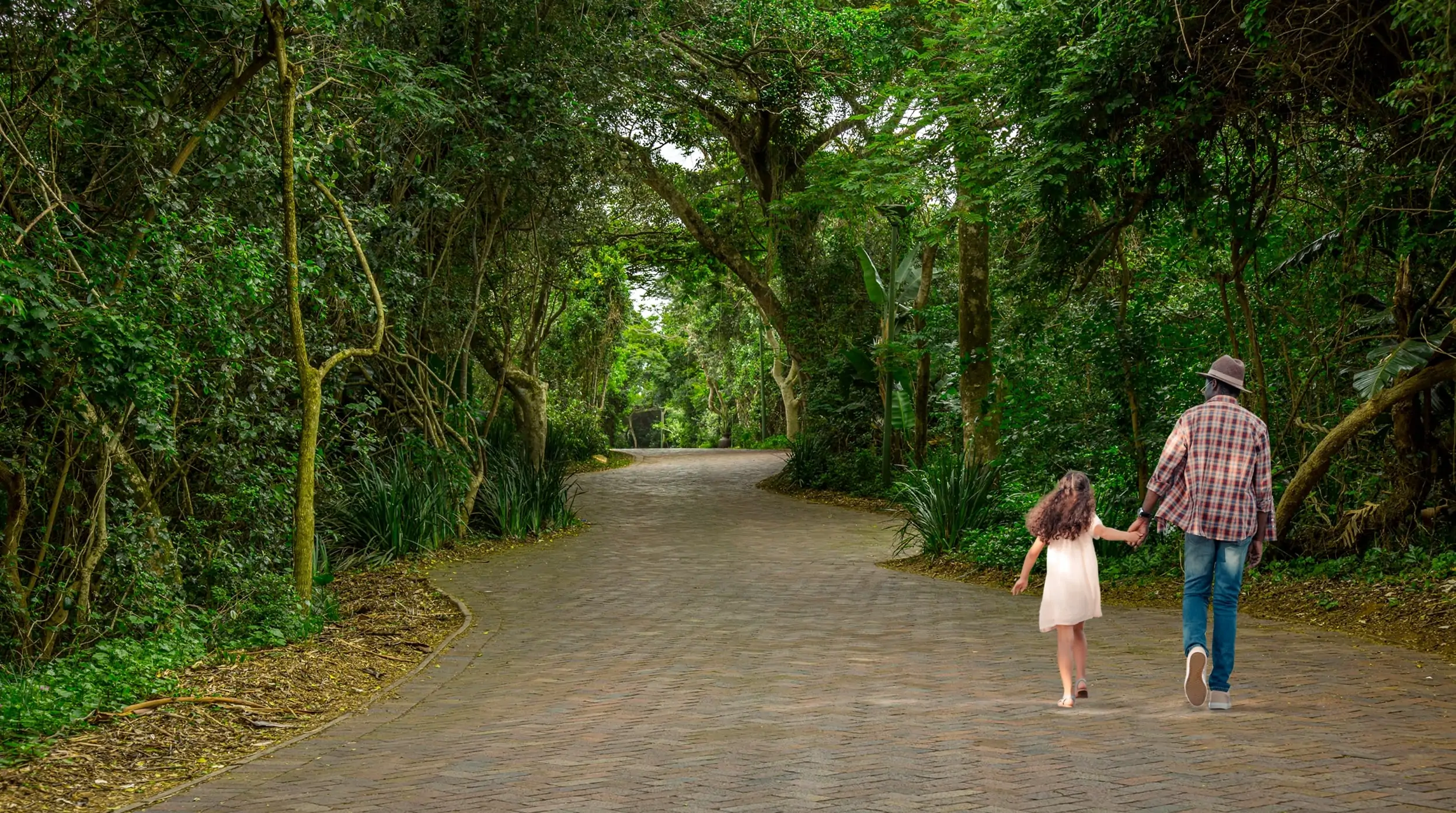
Set along South Africa’s extraordinary Dolphin Coast, Zimbali Estate occupies a rare convergence of coastal forest, dunes, wetlands, and protected grasslands. Long celebrated as one of the continent’s most desirable residential addresses, the estate has always offered an enviable lifestyle defined by design excellence, privacy, and natural splendour. What now distinguishes Zimbali Estate on the global stage, however, is the depth and authenticity of its environmental vision – a fully integrated approach to ecological stewardship that rivals the thinking of many formally protected nature reserves.
This is not sustainability as surface narrative. At Zimbali Estate, environmental care is woven into the fabric of everyday life, visible in the way landscapes are shaped, species are protected, and residents are invited into a shared relationship with the land. It is a philosophy led by the Estate’s Environmental Department, whose work extends well beyond maintenance into long-term regeneration. Reforestation, invasive alien plant control, habitat restoration, controlled ecological burns, and species reintroduction form part of a living, adaptive strategy designed to build resilience over generations, not marketing cycles.
Throughout the estate, the landscape tells this story quietly but confidently. Indigenous forests are strengthened and expanded, grasslands are carefully restored, and wetland systems are rehabilitated to function as nature intended.
Planting is never decorative alone; it is intentional, guided by ecological function and future impact. Every indigenous tree, shrub, and groundcover is selected for the role it plays in soil health, water retention, biodiversity corridors, and climate resilience. The result is an environment that feels both wild and deeply considered – curated not for spectacle, but for longevity.
At the heart of this regenerative philosophy lies the Zimbali Estate Nursery, a quietly powerful operation that embodies the estate’s belief in renewal over consumption. More than a source of plants, the nursery functions as an ecological engine – cultivating indigenous species, restoring degraded areas, and supporting residents who wish to landscape in harmony with nature. Plants grown here are not imported trends, but locally rooted expressions of place, many propagated from material sourced within the estate itself.
The nursery also reflects Zimbali Estate’s commitment to circular thinking. Organic material generated across the estate is transformed into rich compost and mulch, returning nutrients to the soil and closing natural loops that are so often broken in modern development. This regenerative cycle is largely invisible to the casual observer, yet it underpins the health of the entire landscape. It is sustainability practiced with quiet confidence – efficient, intelligent, and deeply aligned with the rhythms of nature.
Residents play an essential role in this system. Encouraged to source indigenous plants and supported by expert environmental guidance, homeowners become active participants in the estate’s ecological story. Gardens are no longer isolated design statements, but extensions of a broader habitat network. Through these choices, residents conserve water, support local wildlife, and develop a more meaningful connection to the land they call home.
Grassland restoration represents another critical layer of Zimbali Estate’s environmental work. Often overshadowed by forests and wetlands, grasslands are among the most threatened ecosystems globally. Within the estate, these landscapes are being carefully reawakened through a blend of traditional ecological practices and modern science. Controlled burns, selective clearing, and indigenous reseeding are restoring balance and biodiversity, allowing these open systems to function as they once did – resilient, dynamic, and alive.
Advertisement
Zimbali Estate’s approach to wildlife conservation is equally deliberate. The estate is not merely a backdrop for nature, but an active custodian of it. From the reintroduction of regionally indigenous antelope to the careful rehabilitation and release of smaller mammals, the focus is on restoring ecological relationships rather than creating spectacle. Wildlife is respected as part of a living system, not an attraction.
Nowhere is this more evident than in Zimbali Estate’s relationship with the African crowned eagle. A breeding pair of these rare apex predators has made its home within the estate’s protected forests – a remarkable indicator of ecological health given the species’ sensitivity to disturbance. Through scientific collaboration, monitoring, and a strong culture of respect among residents, Zimbali Estate has become a recognised partner in crowned eagle conservation. The presence of these powerful birds is not only a symbol of success, but a reminder of what becomes possible when development and nature are thoughtfully aligned.
Crucially, residents are not positioned as observers, but as stewards. Citizen science initiatives, guided environmental walks, and participatory conservation activities invite the community into deeper awareness and responsibility. Children and adults alike learn to recognise birds, reptiles, and nocturnal creatures, transforming everyday encounters into moments of connection and care.
This philosophy is echoed throughout Zimbali Estate’s network of nature trails. Paths are designed to work with the landscape rather than against it, guiding residents through forests, across ridges, and alongside wetlands. Interpretive signage and subtle educational features turn these walks into living classrooms, fostering curiosity without disrupting the sense of immersion. Nature here is not curated for convenience, but revealed through experience.
Beyond its boundaries, Zimbali Estate extends its environmental ethic to the coastline it protects. Regular beach clean-ups, collaboration with conservation partners, and a commitment to coastal health reinforce the estate’s understanding that stewardship does not stop at the property line. Environmental thinking also informs infrastructure decisions – from water-wise landscaping and stormwater management to recycling systems and ecologically sensitive design in new development.
Together, these layers form a coherent vision of luxury rooted in ecology. Zimbali Estate offers more than an exceptional lifestyle surrounded by natural beauty; it offers a blueprint for how luxury itself can evolve. By aligning prestige with purpose, and comfort with care, the estate demonstrates that high-end living and environmental stewardship are not opposing ideals, but mutually reinforcing ones.
In a world increasingly defined by environmental uncertainty, Zimbali Estate stands as a living example of what it means to give back more than is taken. Here, luxury does not exist in opposition to nature – it flows from it. Every intervention is guided by ecological intelligence and a belief that the most enduring form of prestige lies not in excess, but in balance, restoration, and respect for place.
