Advertisement
In the final edition of 2024, The BUZZard chatted to Pietman van Heerden about the dynamics of the resident springbok, and learnt that it’s a ‘bachelor herd’
– a term usually referring to a group of juvenile male animals that are still sexually immature, or harem-forming bucks that have been thrown out of their parent groups but have not yet formed a new family group.
Pietman has forever been involved with the monitoring of wildlife at Kingswood, but since the retirement of Dan de Wet in January this year, he also serves as chairman of the KGE subcommittee on wildlife management. The BUZZard caught up with Pietman, freshly returned from a trek upcountry, to check on the state of the estate’s fauna.
Managing the rams
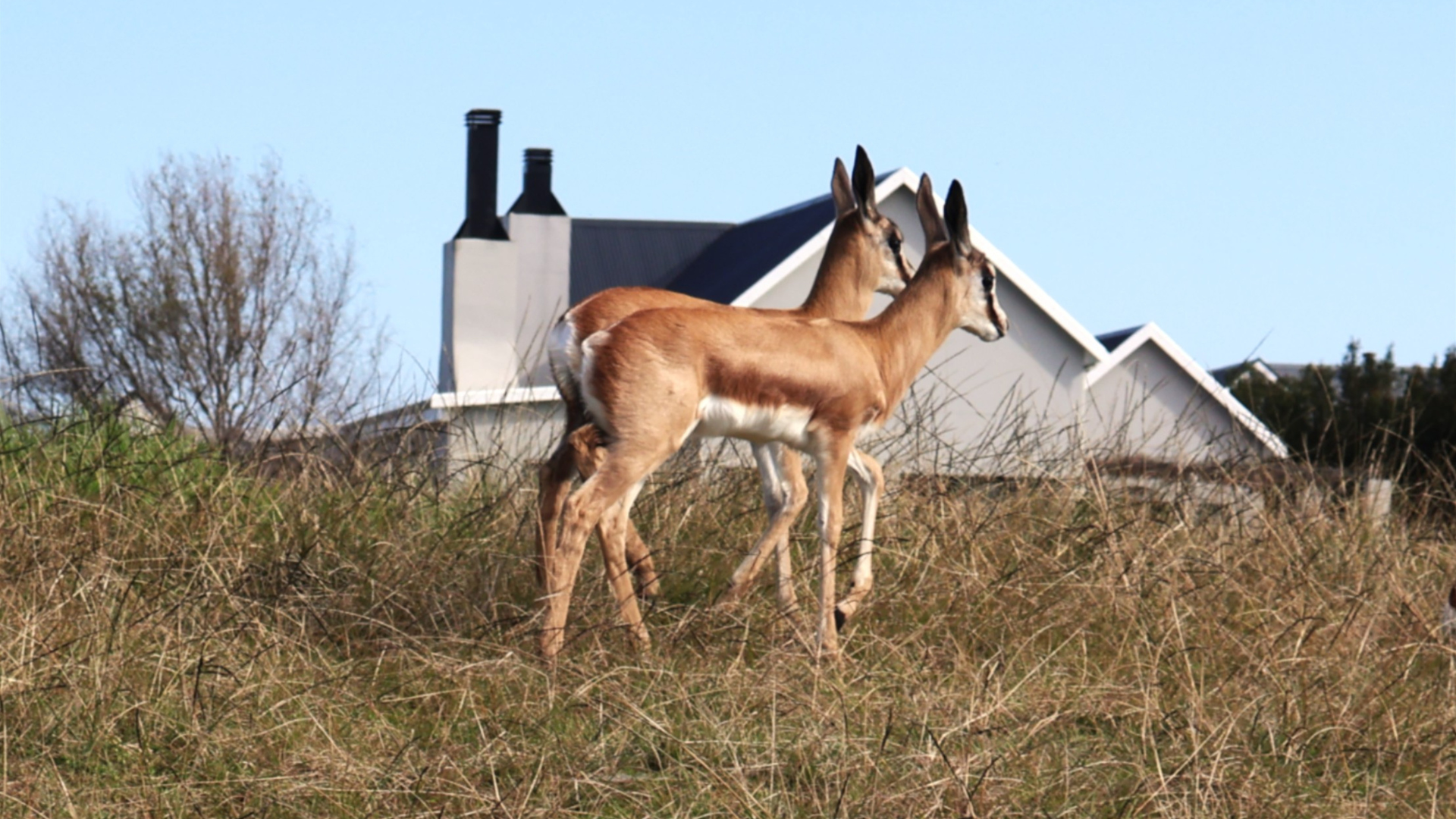
During an interview last year, Dan explained that vet Christiaan Blignault had suggested ‘we wait until the middle of next year to allow the herd to settle.’ Well, that’s around now, and Pietman is taking action to ensure the health of the herd and its newest arrivals. ‘I’ve taken out 12 rams and brought in two from Oudtshoorn – neither of which survived because of lung trouble and other ailments. So our herd was without big rams for a while, but we’re now bringing in rams from Mossel Bay, and then we should see new lambs on a weekly basis.’
Double delight at Kingswood
Nature has given us something special to celebrate at Kingswood with the arrival of a beautiful pair of twin springbok lambs, born at the beginning of June. The twins have been delighting residents and visitors alike as they explore their surroundings under the watchful eye of their mother. Twin births in springbok are relatively uncommon, making their arrival an exciting addition to our wildlife family.
Kingswood HOA trustee Pietman van Heerden says, ’I’ve spoken to quite a few game farmers, and they all agree it is a rare thing to see the birth of springbok twins. In fact, most of the farmers I have spoken to have never seen twin births.’ Van Heerden is keeping a close eye on them, and he says that the mother is taking good care of them and that they are looking healthy. Following the recent loss of our much-loved black springbok, Siya, nature has brought a beautiful reminder that life continues with the arrival of the twins.
Advertisement
If you’re out walking or enjoying a round of golf, keep an eye out for these adorable newcomers. As always, we encourage everyone to admire them from a respectful distance, allowing them to thrive in our beautiful estate.
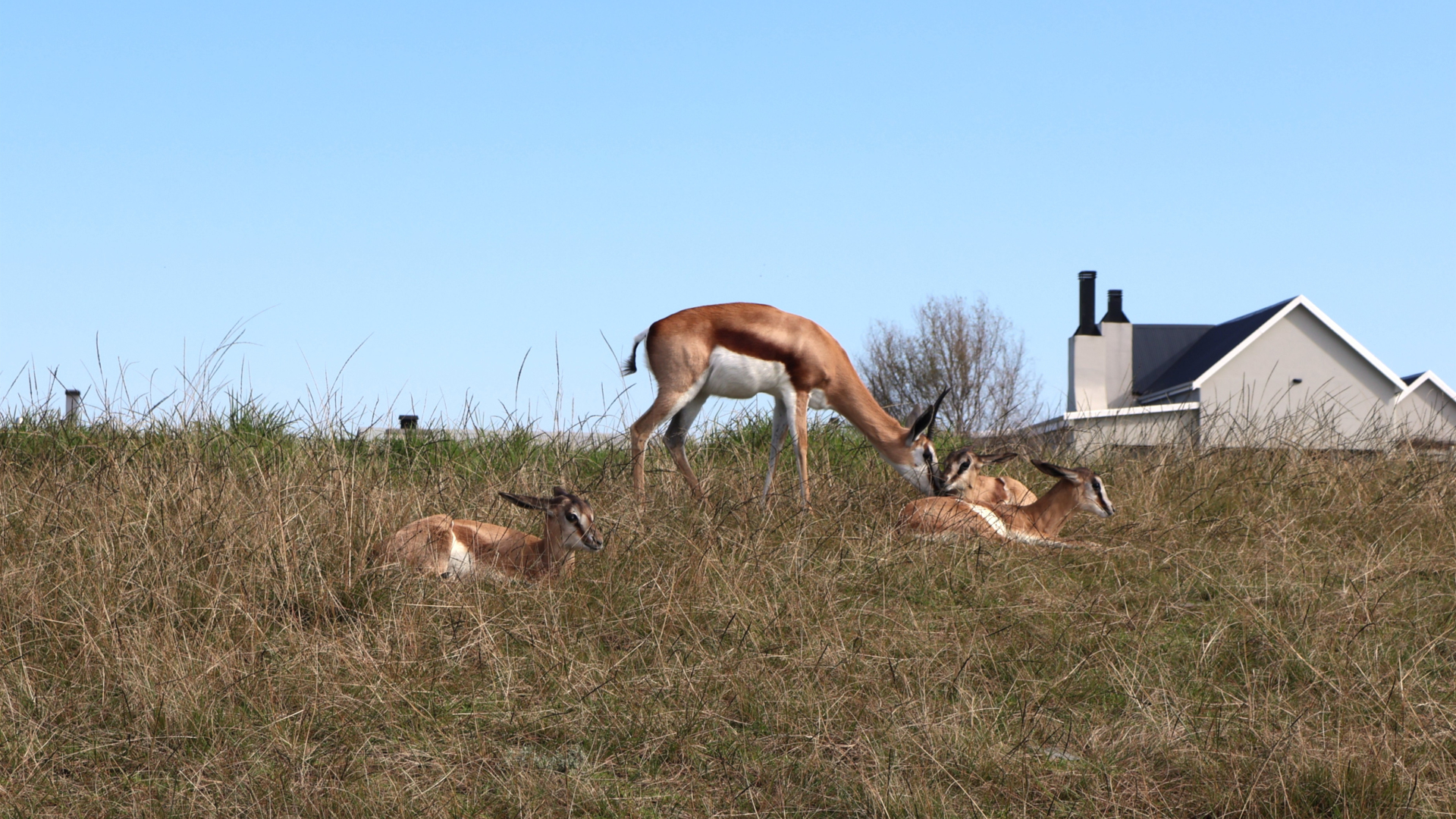
New arrivals have indeed been rife, after two births in May, and the twins arriving during the fi rst week of June. Now residents can enjoy the sight of several generations of the estate’s famous free-roaming herd of springbok and its newest additions.
With foot-and-mouth disease (FMD) affecting farms across SA, it was necessary to ask whether Kingswood’s animal keepers need worry about the spread of this highly contagious viral illness that exclusively infects clovenhoofed domestic and wild mammals. ‘No, we’ve not had to worry about FMD as it mostly targets cattle and other split-hooved animals – aff ected livestock also include sheep, and pigs,’ explains Pietman.
He is happy to report that bushbuck are still being spotted on the estate. The prevalence of these buck at KGE was previously regarded as a result of the Mediclinic construction site cutting off parts of wildlife corridors along the estate’s boundary. This may also be the case with other small game spotted within the perimeter fence. ‘There may be fewer bushbuck on the estate right now. They mostly head our way from the direction of George, and often hang in the kloofs and mountain courses surrounding the town.’
Pietman says the recent storms didn’t seem to have a significant impact on the estate’s wildlife. ‘And when it comes to water animals such as the clawless otter and water mongoose that live in our dams and rivers, they would have moved on to higher ground along the banks when threatened by flooding.’
When questioned on other small game such as porcupines being spotted by residents, Pietman says these spikey rodents are particularly active at the moment, to the great chagrin of many a gardener. ‘Spotting a porcupine is a privilege, but they have taken a serious liking to arum lilies (Zantedeschia aethiopica). So, for a cultivator of these pretty plants, it may not be much fun to witness porcupine feasting on your lilies. ‘Especially if positioned outside the fence – they will not hesitate to topple the pots and chomp up your arums in a few big gulps!’
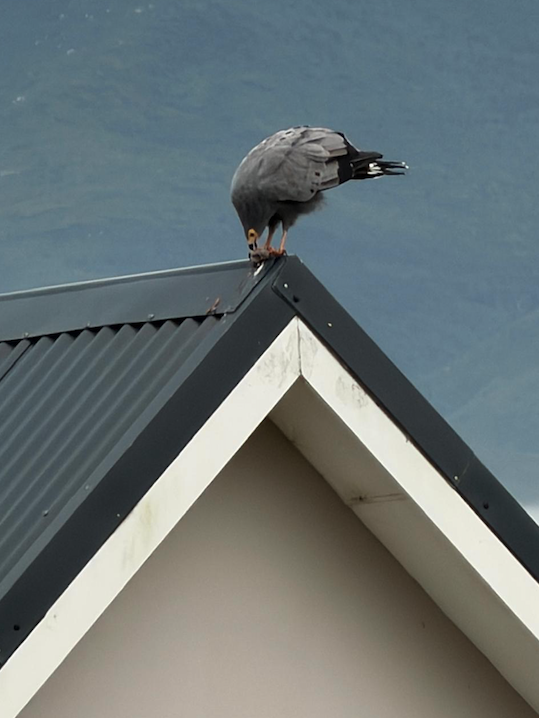
Bird life … and death of nestlings
Pietman is excited about the presence of birds of prey at KGE, and has captured spectacular video footage of an African Harrier-Hawk, pictured on the roof of a Kingswood abode while devouring a baby bird removed from its parental nest just moments before.
‘The jakkalsvoëls and kaalwangvalke are very active at the moment, the latter being famous for stealing babies from nests for a snack,’ he says. ‘Jakkalsvoël’ translates to Jackal Buzzard in reference to its distinctive, loud, yelping call, which sounds remarkably like the cry of a Black-backed Jackal. It’s a large, stocky bird of prey with dark plumage, a prominent chestnut/rufous breast, and a striking white undertail.
They are frequently spotted perched on rocky outcrops, roadside poles, and fences in mountainous or hilly grasslands, and are common in coastal and mountainous regions of the Western Cape. ‘Kaalwangvalk’ translates to African Harrier-Hawk – a medium-sized bird of prey easily identified by its pale grey plumage, distinctive bare patch of yellow or red skin on its face, and a broad black-and-white band on its tail.
They are highly specialised hunters equipped with double-jointed legs, allowing them to reach deep into tree cavities, rock crevices, and weaver nests to extract eggs, nestlings, small mammals, and reptiles. Call 0861 72 71 70 if you would like to report unique wildlife sightings, or in case of animals in distress.