
Advertisement
TAKE WATER, FOR EXAMPLE. SECOND TO AIR, IT’S THE ONE THING WE ABSOLUTELY CANNOT DO WITHOUT, BUT WE’VE GOT USED TO IT ALWAYS BEING AVAILABLE. WE’RE USED TO WATER – CLEAN DRINKABLE WATER – JUST COMING OUT OF THE TAP WHENEVER WE WANT IT, SO WE TAKE IT FOR GRANTED.
But that’s changing. We’re starting to realise that this miracle of technology and social engineering is not as robust as it once seemed, so we’re rethinking water storage. On a municipal scale We all remember how Capetonians ran around like headless chickens in unwashed T-shirts in 2017, but we’re now realising that this was not an anomaly. It’s the new norm. During the first half of the 2025/26 financial year, Nelson Mandela Bay Metro (Gqeberha) lost about 60% of all the water entering the municipal reticulation system through more than 6,000 reported leaks.
The figure for most of Gauteng is a bit less scary at about 40%, but it’s still way unacceptable. The crazy thing is that, even though water is falling from the sky, it’s not ending up in the municipal water reticulation system, as famously illustrated by a woman in Melville who took the opportunity to have a shower in the street when it was raining. There are areas of Gauteng that have gone for three weeks or more with no water, having to rely on water tankers, while the premier, Panyaza Lesufi, checks into a hotel whenever he needs a shower. The problem with most of our municipalities is not a lack of water, per se, but rather a lack of adequate infrastructure to store and transport it. But that’s just part of the problem. Water is becoming an increasingly scarce resource globally, so we need to consider every aspect.
ON A GLOBAL SCALE
A 2025 report by the World Bank reveals that almost every continent is drying up at an alarming rate. It’s not that water is disappearing from the planet – that is unlikely, as the total amount of water on earth is virtually a constant. Water is moving from the continents, where we humans really need it to be, to the oceans, in a process called continental drying. It’s partly fuelled by climate change and the melting of ice caps and permafrost.
But it’s also fuelled by increased use of groundwater and evaporation of surface water in dams and other bodies of fresh water. The World Bank report found that continents have surpassed ice sheets as the biggest contributor to global sea level rise, with approximately 324 billion cubic metres of water on a one-way trip to the ocean every year. That’s estimated to be enough to meet the annual water needs of 280 million people. It’s equivalent to losing four Olympic-size swimming pools every second, said the report’s lead author, Fan Zhang.
And each of those swimming pools is being lost somewhere along the line – by a municipality, a householder, an estate manager, a mining company, or a farm. So, let’s look at ways of becoming part of the solution, rather than part of the problem.
ON AN ESTATE SCALE
One of the advantages of living on an estate is that you can control some aspects of service delivery. But only some. If you’re at the end of a dilapidated water delivery system, you will be facing some challenges. But you can – to a certain extent – mitigate them.
Advertisement
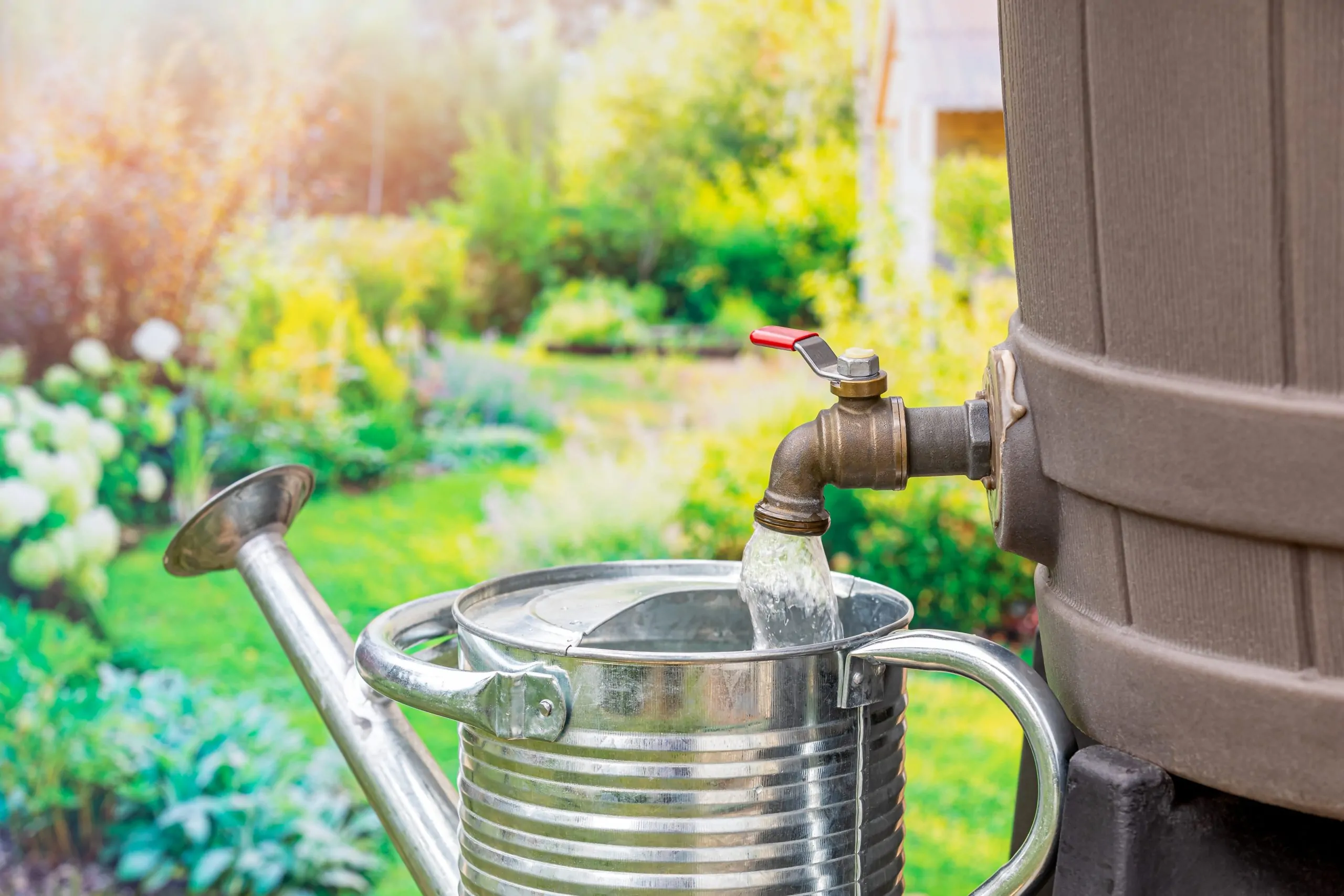
Harvesting rainwater and recycling grey water are absolute no-brainers, and every estate should be maximising the potential of these two simple systems. Another great option is a borehole, but you do need to ensure that you comply with the requirements of the National Water Act, so it’s not a problem-free panacea. The Act also applies to rivers and, if you’re lucky enough to have one running through your estate, you probably know that sometimes it has too little flow, and sometimes it has too much. And there’s nothing worse than watching all that water running right through your estate only to create floods and havoc downstream.
So, really, the solution is to ensure that most of the water that arrives on your estate – whether through pipes from the municipality, from a flooding river, up from the ground via a borehole, or from the sky as the blessing of rain – does not leave. If only there were a flexible water storage solution that could be expanded to take advantage of increased supply. Well, there is. It’s called the Damsak. Water Pillow?
Water bladder – smart solution
The Water bladders is unlike any other water storage product. It’s lightweight, it’s portable, and it’s a totally home-grown, proudly South African product designed for South African problems and South African conditions. The Water bladder is made from pliable but extremely strong PVC – basically a giant version of the bag you get inside boxes of wine or olive oil.
And, as with wine or olive oil, the bag shrinks to fit the contents, so no air gets in, and no light gets in either. What this means for wine and olive oil is that they last longer, and what it means for water is that no algae can grow. That’s just one of the advantages. Others include cost-effectiveness and ease of installation. Unlike for most outdoor water storage tanks, you don’t need a cement base. All you need is a level surface, preferably covered with nice, even river sand or building sand, and connections for inlets and outlets. You can choose the right size for your needs, starting at 500 litres, going all the way up to 500,000 litres.
You’d need a dedicated space for the 500,000-litre monster, but the 500-litre or 1,000-litre Water bladder could hide under your deck, and, at eight metres by six metres, the 50,000-litre model could fit neatly into a space no bigger than a small drying yard. Bottom line, if you’re looking for a cost-effective, flexible water storage solution, the Water bladders is probably the smart choice.
