
Advertisement
National Arbour Week ran from 1 – 7 September. For 2026, the South African Department of Forestry, Fisheries and the Environment placed its national focus on champion trees, indigenous planting, and community greening.
Champion trees, such as the Woodville Big Tree (an 800-year-old Outeniqua yellowwood), are historical and monumental trees that form an important part of South Africa’s natural and cultural heritage. For Arbour Week, the Department encouraged all citizens to plant local indigenous trees, focusing heavily on greening urban settlements. To this end, Kingswood resident Albert Kok has already been working tirelessly for some years to reforest our estate with indigenous trees.
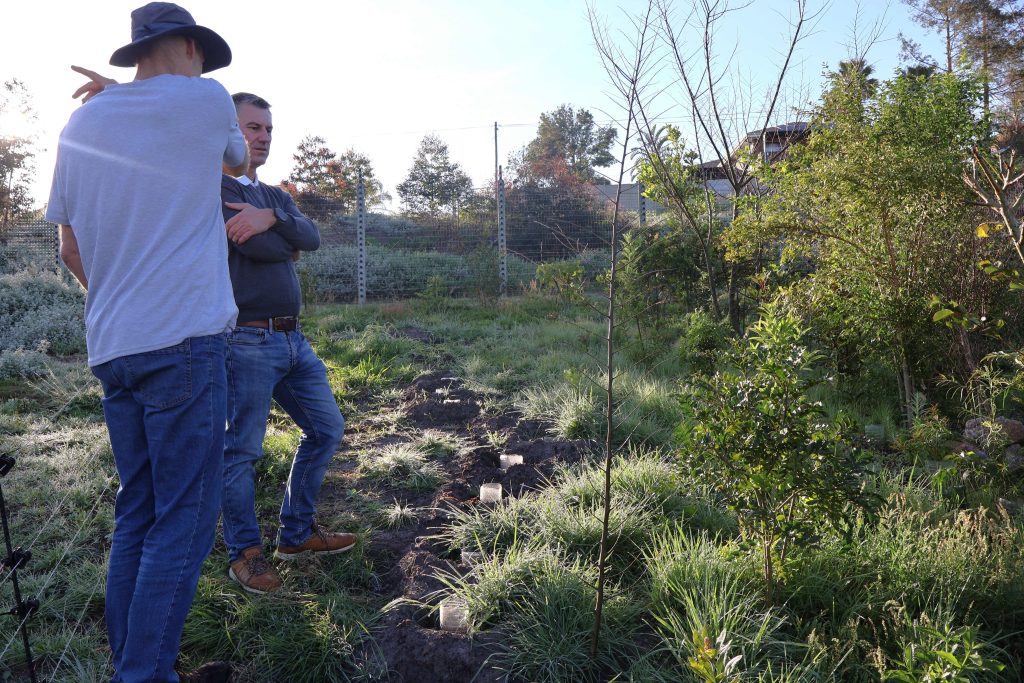
Albert spearheaded a pilot project based on the Miyawaki method – a proven technique for rapidly establishing dense, indigenous forests. This approach involves preparing small, targeted plots and planting a high diversity of locally indigenous tree species at high density, which encourages rapid vertical growth, suppresses weeds naturally, and accelerates the development of a self-sustaining forest system.
While these pocket forests require careful maintenance for the first two to three years, they soon become resilient and largely self-sufficient. The greenbelts of Kingswood Estate are largely composed of degraded valleys, shaped by over three centuries of disturbance. While recent efforts have successfully focused on the removal of invasive alien vegetation such as black wattle, eucalyptus, box elder and pampas grass, this alone is not enough to restore these areas to their original ecological richness.
Because this degradation has occurred over such a long period, natural recovery is likely to be slow and requires a more active, regenerative approach. Albert’s pilot project therefore offers an opportunity to explore how the Miyawaki method can help accelerate the restoration of these degraded areas and re-establish diverse, indigenous forest systems.
Learning from our pilot project
Since 2020, we have been testing practical approaches to restoration within the estate. Our initial efforts involved planting saplings several metres apart within the greenbelt. While well-intentioned, this method proved largely ineffective due to grazing pressure. Bushbuck browsed the new growth, while vlei rats consumed many of the young plants down to ground level.
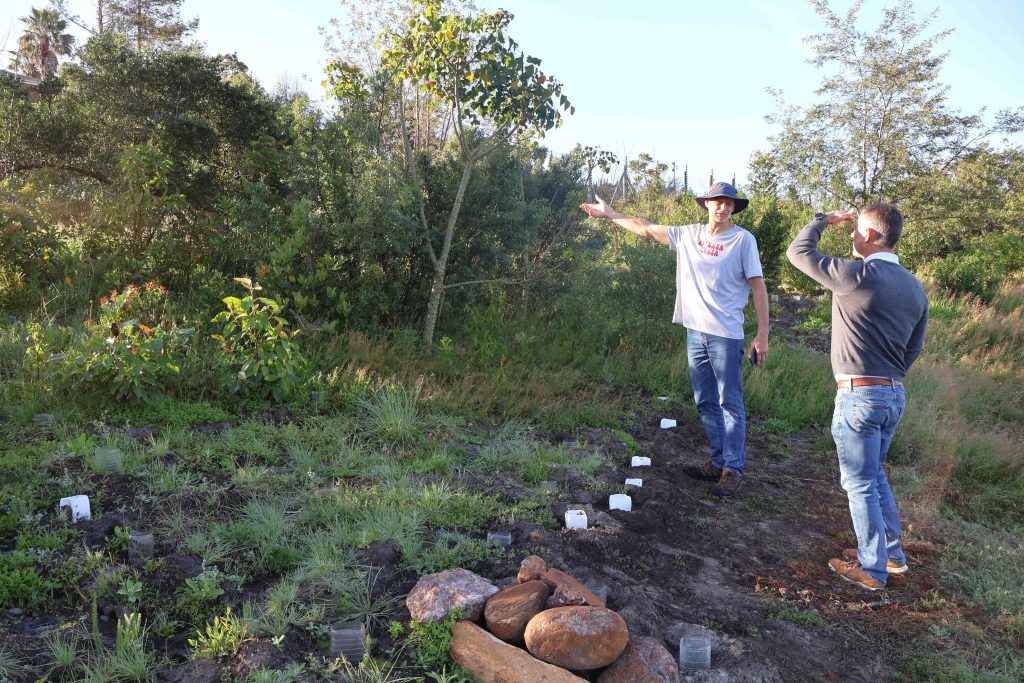
We introduced grow pipes to protect the saplings, which provided some resistance against bushbuck browsing, but offered little defence against vlei rats. These early challenges highlighted the need for a more controlled and intensive approach. In response, we established a pilot enclosure of approximately 15 by 30 metres where all existing vegetation was cleared and the area fenced off with a garden border. The results have been encouraging. Within this protected space, tree survival rates increased significantly, and many of the planted trees have now exceeded two metres in height.
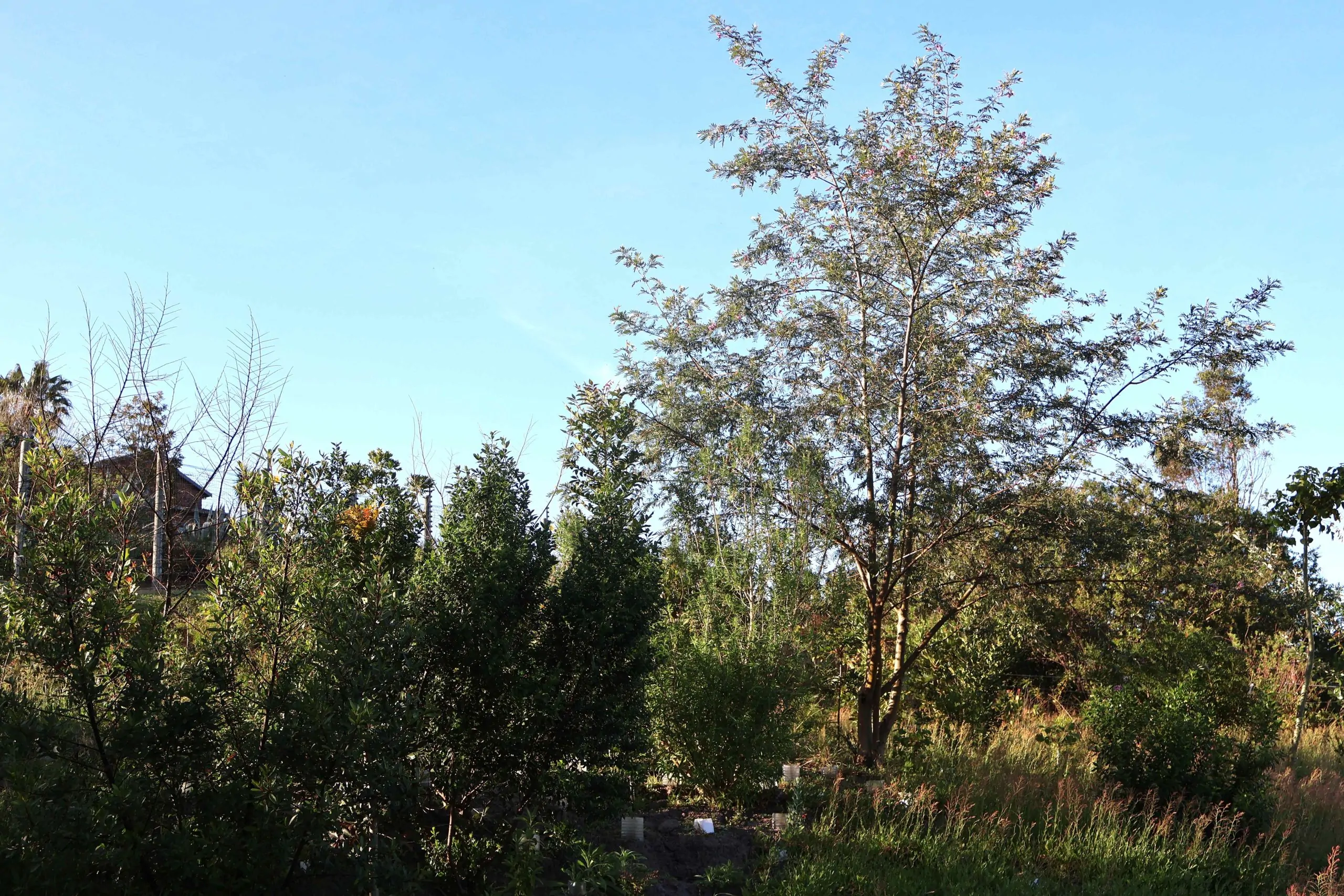
This success has provided valuable insight: effective restoration in this environment requires both protection from grazing and higher-density planting strategies. Albert proudly calls this pilot project Fairbourne Forest, a special space that reflects his passion for indigenous trees and the natural beauty of our area. Many of the trees have been lovingly grown by Albert himself from seed, and the forest now boasts an impressive variety, including keurboom, coast coral tree, Cape fig, wild plum, white ironwood, Halleria lucida, wild mulberry, soap dogwood, Outeniqua yellowwood, Cape ash, wild peach and assegai. And, of course, there is his pride and joy – the black stinkwood.
By establishing multiple pocket forests throughout the estate, we can enable natural propagation processes to take hold, gradually restoring biodiversity and ecological function across the greenbelts.
Advertisement
For Arbour Week 2026, the Kingswood HOA has identified an area where another of these pocket forests can be established, creating an opportunity for our community to play a meaningful role in restoring and enriching our natural environment. Community involvement will be key to the success of this initiative, and we encourage homeowners to get involved by donating an indigenous tree. Please contact the HOA if you would like to contribute.
More than simply planting trees, this is an opportunity to create a shared sense of ownership and pride in the restoration of our estate. Imagine the long-term impact: shaded walkways, richer birdlife, and perhaps, one day, the distinctive call of the Knysna Turaco echoing through the trees near the community centre.
